
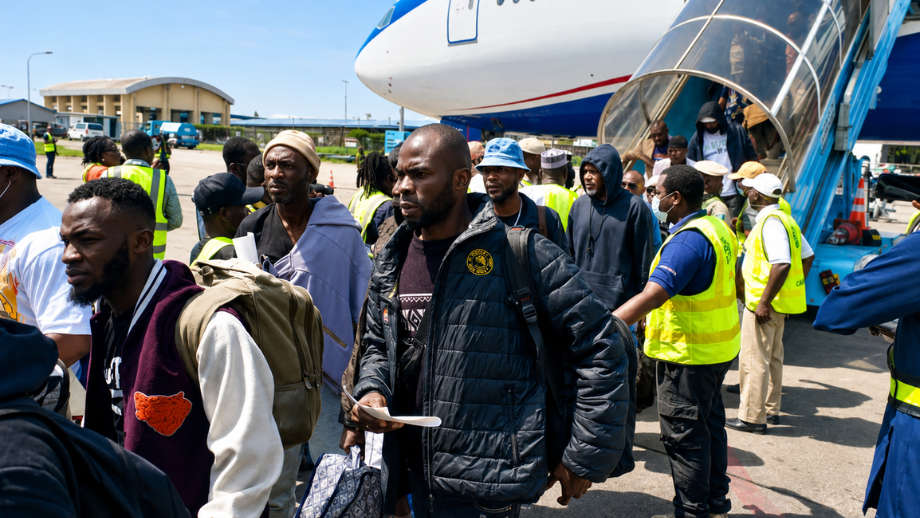
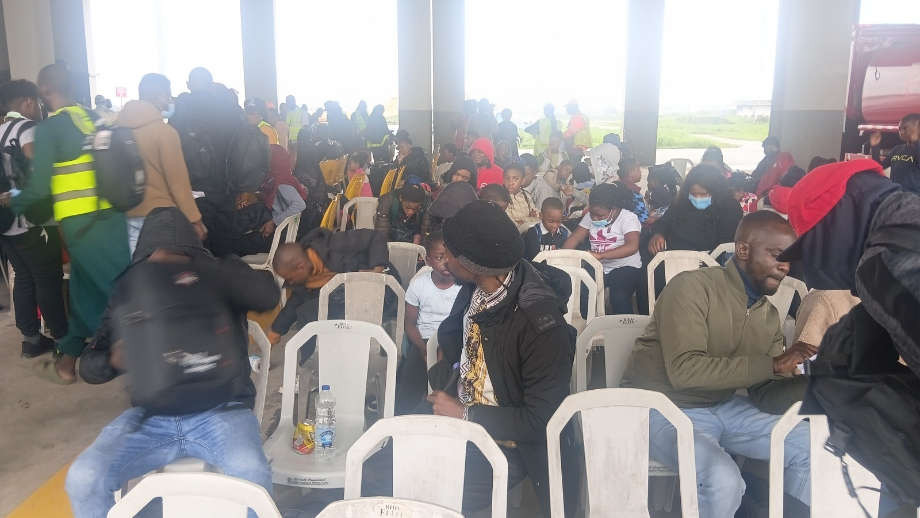
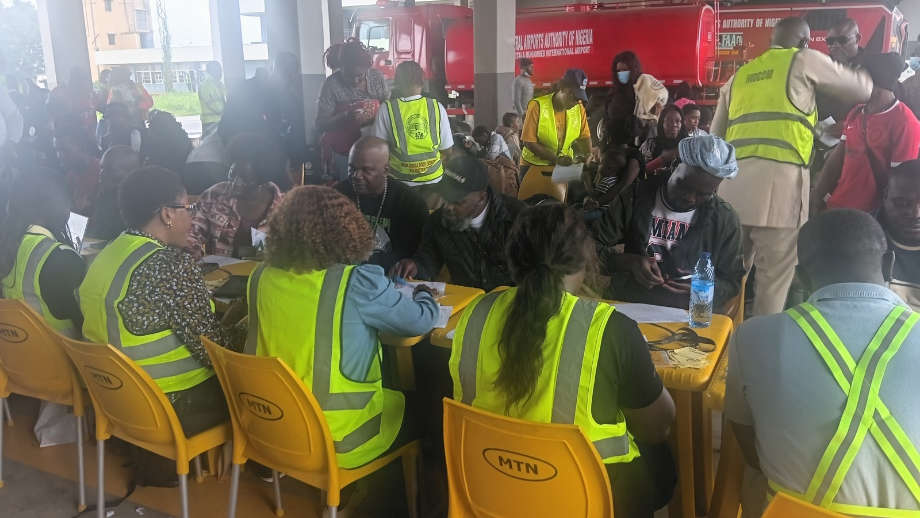
Nigeria has successfully evacuated over 1,200 Nigerians from South Africa in partnership with Air Peace, with the last batch of 305 landing at the Murtala Mohammed Airport, Lagos, on Wednesday.
The evacuees wore a look of despair and relief after a harrowing past few months that left many of them stranded in the South African winter, sleeping on the floors of the Nigerian consulate and hiding away in dumpsites for fear of their lives.
One Nigerian mother, Obi Constance Nkiru, a salon owner, recounted her experience to Nigeria Info.
"I had to close my salon business for over two months because of the threats I was getting," Obi Constance Nkiru, a mother of three from Anambra State, said.
"We were running and hiding, and at a point, feeding became difficult."
Obi said she lived in South Africa for 16 years, birthing all her children in the country.
Jude Ikechukwu, a footballer turned pastor, said things got so bad that it affected his football career.
"The xenophobic and Afrophobic mindset got to the pitch," he told our correspondent.
"I lost the light in my eyes for football.
"Luckily, I had another calling, which is ministry, and that kept me going until I was forced to evacuate."
Government agencies including the Nigerians in Diaspora Commission (NIDCOM), headed by Abike Dabiri, were on hand to welcome the final batch, promising them government interventions to help them settle in Nigeria.
Nigeria Must Hold South Africa Accountable – Bakare-Yusuf
A publisher, activist and host of Borderlines on Nigeria Info 99.3FM, who returned with the evacuees after spending weeks on the ground in South Africa, spoke firmly about the need to consider diplomatic action against South Africa over the attacks.
Ireti Bakare-Yusuf said intelligence has reached her that copycat attacks were springing up in Senegal against Nigerians, and that only consequences to South Africa can curb these attacks from taking root in Senegal and other countries that are prone to anti-foreigner sentiments.
Bakare-Yusuf also firmly rejected the opinion that migrants are responsible for crimes and other problems in South Africa.
Instead, she blamed decades of poor governance, high unemployment, corruption and political failures for creating conditions in which foreigners have become easy targets.
"What this boils down to most is the failure of the South African government to adequately pass on the dividends of the democracy that the people of South Africa lost their lives for," Bakare-Yusuf said.
"When you fail the citizens, you divert their attention to the vulnerable."
She also criticised what she described as the stereotyping of Nigerians as criminals, saying there is no publicly available evidence proving widespread drug-related convictions involving Nigerians in South Africa.
Such claims, she argued, distract from demands for justice and compensation for victims of the attacks.

Comments
Add a comment