
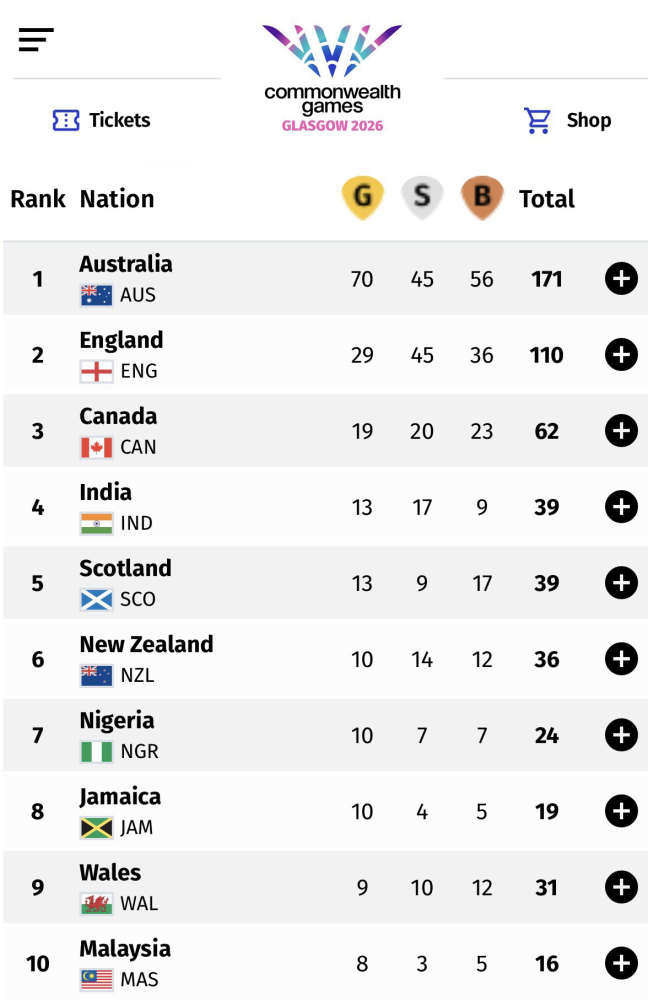
Team Nigeria will end its Glasgow 2026 Commonwealth Games campaign as the highest-ranked African nation after a medal-winning final day of athletics helped secure seventh place on the overall table.
Nigeria finished with 10 gold, seven silver and seven bronze medals for 24 medals, trailing only Australia, England, Canada, India, hosts Scotland and New Zealand.
South Africa, the next-best African team, finished outside the top 10.
Ogazi, Onojuvwevwo Lead Final Athletics Charge
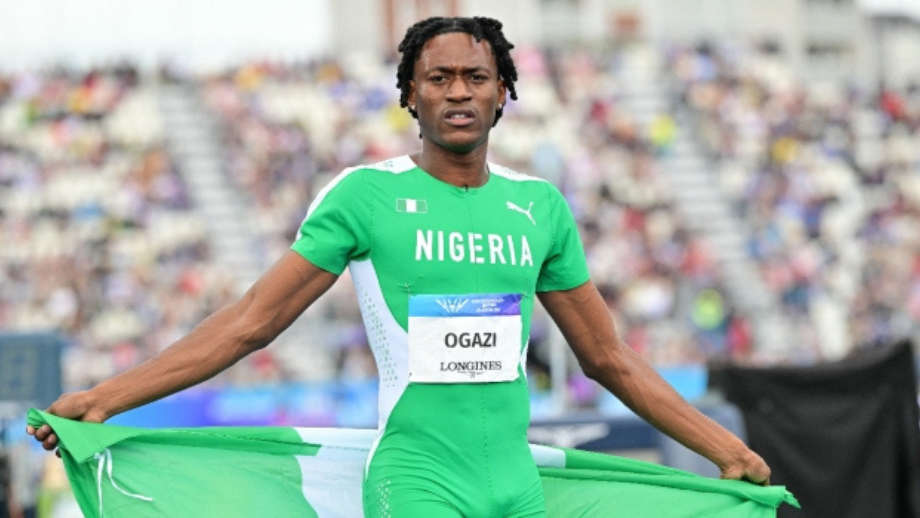
Samuel Ogazi provided one of Nigeria’s biggest moments on Day 9, winning the men’s 400m in 44.25 seconds for the country’s first Commonwealth Games gold in the event.
Ogazi pulled away from Trinidad and Tobago’s Jereem Richards and South Africa’s Zakithi Nene to complete a historic victory.
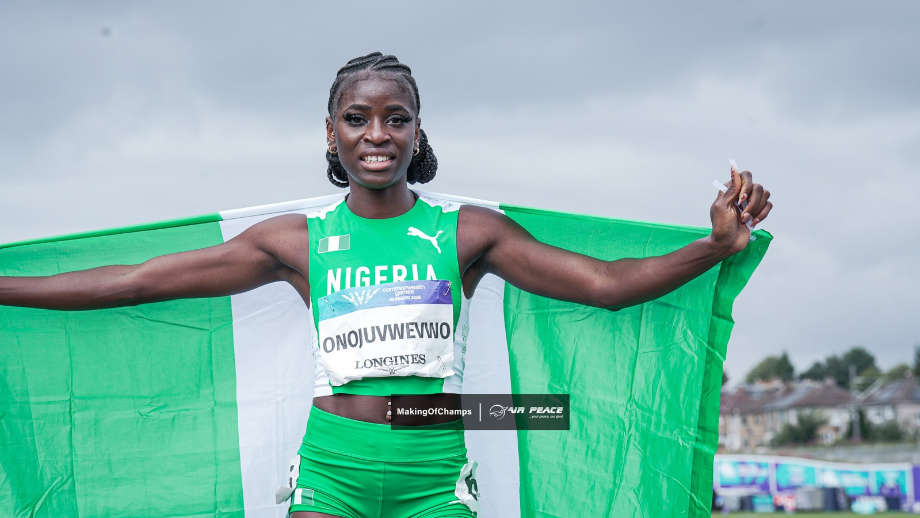
Ella Onojuvwevwo added bronze in the women’s 400m, while Ruth Usoro claimed silver in the women’s long jump.
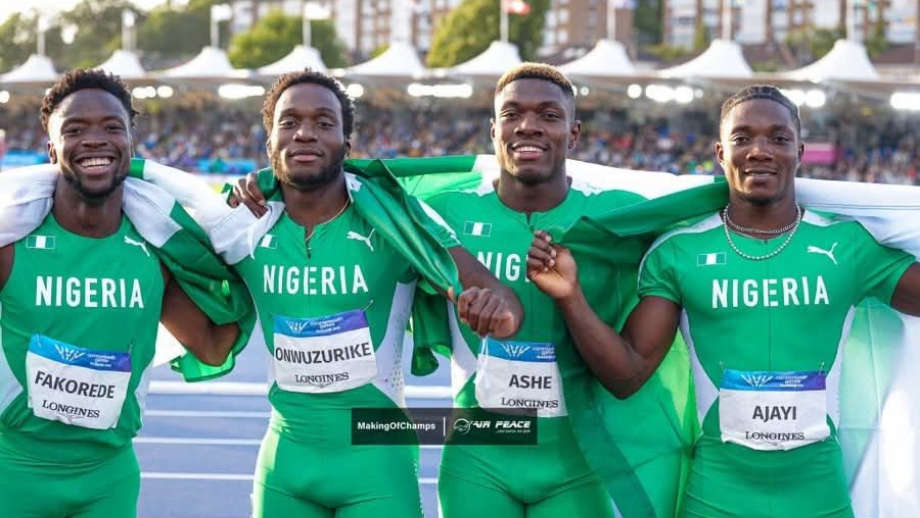
The men’s 4x100m relay team also took bronze after a dramatic sequence of protests and appeals.
Canada were initially disqualified before being reinstated in second place, pushing Nigeria into third.
Team Nigeria also medalled in the inaugural mixed 4×400 relays with the quartet of Ezekiel Nathaniel, Patience Okon-George, Samuel Ogazi and Ella Onojuvwevwo combining to win bronze in.
They clocked a season’s best of 3:12.85 to finish third behind Jamaica and England, bringing Nigeria’s athletics campaign in Glasgow to a memorable close.
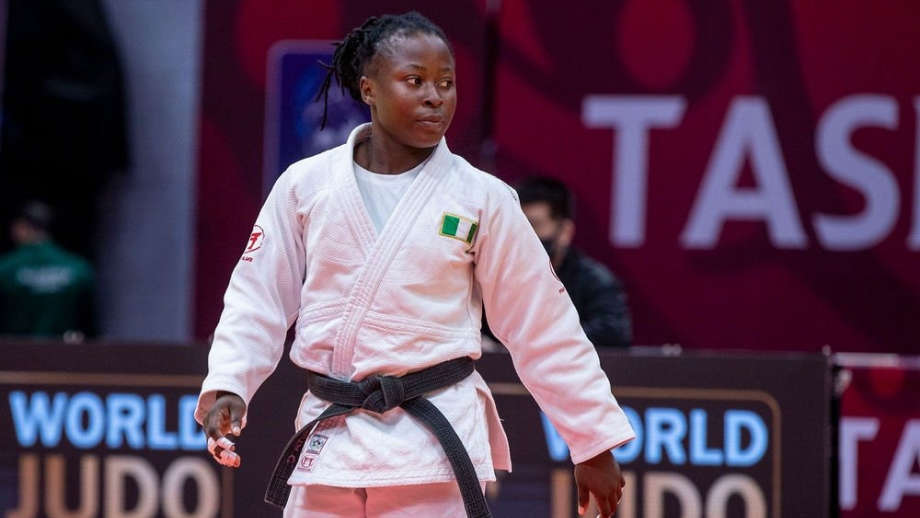
Enku Ekuta also secured the bronze medal in the women’s -63kg event in Judo, giving Nigeria their only medal in combat sports.
Nigeria’s Medalists Shine Across Six Sports
Nigeria’s 10 gold medals came from athletes across athletics (track and field), weightlifting and para sports.
The champions included Esther Nworgu, team captain Folashade Oluwafemiayo and Rilwan Idris in para powerlifting; Ruth Nyong, Onome Didih, Edidiong Umoafia and Rafiatu Lawal in weightlifting; and Samuel Ogazi, Ezekiel Nathaniel and Chukwuebuka Enekwechi in track and field.
Nathaniel won the men’s 400m hurdles in 48.47 seconds, while Lawal successfully defended her Commonwealth title with a record-breaking 229kg total.
Didih also set a Games record in winning the women’s 53kg title.
Other medalists included Kayinsola Ajayi, Udodi Onwuzurike, Ruth Usoro, Ella Onojuvwevwo and the Nigerian relay teams in athletics, while Enku Ekuta ended a 24-year wait for a Nigerian judo medal with bronze in the women’s -63kg category.
Seventh-Place Finish Brings Mixed Feelings
The final position represents a strong African showing but falls below the ambitious expectations set before the Games.
The National Sports Commission had targeted a much bigger medal haul after Nigeria’s record-breaking 35-medal performance in Birmingham in 2022.
The positive, however, is that Nigeria finished in the top 10 with their 24-medal haul earning them the same seventh-place finish as their 35-medal haul in 2022.
This finish also keeps them in the top 10 on the medals table as one of the best African teams at the games.
Still, the Glasgow campaign produced historic firsts, medals across six sports and a new generation of performers who have strengthened Nigeria’s prospects for future major competitions.
After 11 days of competition, the ceremony will provide the final celebration of Glasgow 2026 — and a chance for Team Nigeria to look back on a campaign that secured sixth place overall and confirmed the country as Africa’s leading Commonwealth sporting nation.

Comments
Add a comment